Choosing a Washable Door Mat for a Busy Entrance
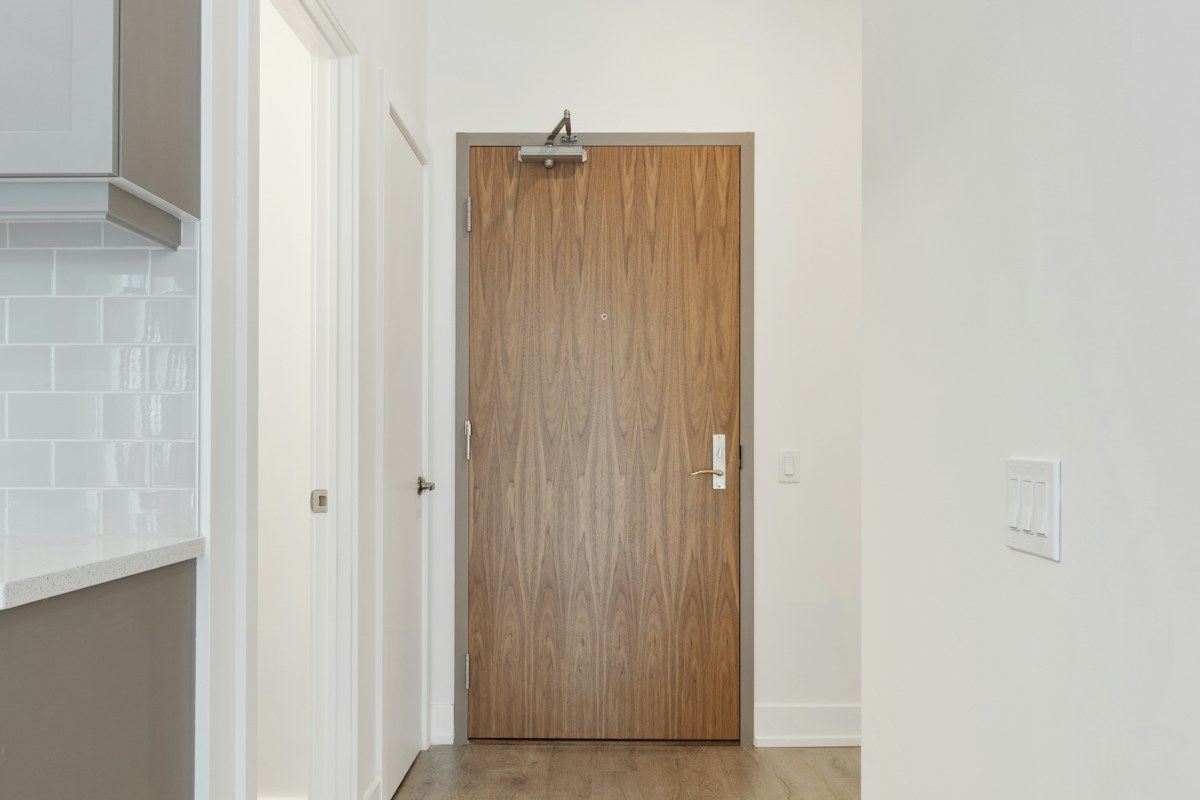
A door mat has a small job with several competing demands. It needs to catch ordinary dirt, stay reasonably tidy, allow the door to open, and be easy enough to clean that you actually do it. Choosing the prettiest washable mat without checking those details can create a daily nuisance beside the front door.
First decide where the mat will sit. An exposed outdoor step, a sheltered porch and an indoor hallway are different environments. A product intended for indoor use should not be assumed suitable for rain simply because it can be washed.
Measure the door, not just the floor
Open the door slowly over the proposed mat area. Check the lowest point of the door, including seals or draught strips. Allow for the mat’s full thickness and any tendency for an edge to lift. A mat that drags with the door can bunch up and become a trip hazard.
Measure the available width while keeping a clear route. A tiny mat may catch only one step, while an oversized one may interfere with a cupboard or stair. Tape the outline on the floor for a day to see how people actually move through the entrance.
If anyone uses a mobility aid, consider their route and the transition at the mat edge. Flatness and stability matter more than a decorative border. Assess the actual product on the actual floor rather than relying solely on a description of its backing.
Compare common formats
| Format | Suits | Check before buying | Compromise |
|---|---|---|---|
| Low-pile washable textile | Indoor daily foot traffic | Wash method and door clearance | May need frequent cleaning |
| Coir-style scraping mat | Removing coarse dirt in a suitable location | Placement and care guidance | Often not machine washable |
| Removable cover and base | Households wanting spare covers | Compatibility and laundering limits | More components and cost |
| Long runner | An entrance with a longer walking route | Flat edges and floor suitability | Harder to lift and dry |
Do not treat washable as a complete care instruction. Some mats permit machine washing; others require hand cleaning. The backing may have different restrictions from the textile surface, and drying can be the part that makes the routine difficult.
Check your washing setup
Read the mat’s care label and your appliance instructions before buying. A mat must fit within the washer’s permitted load and item guidance, including when wet. Avoid choosing by dry dimensions alone.
Ask where the mat will dry. A large mat that must air dry can be inconvenient in a flat with little hanging space. If tumble drying is not allowed, plan an appropriate drying location rather than improvising on a radiator without checking the instructions.
A second compatible mat or cover can be useful if the first takes a long time to dry, but it is not automatically necessary. Consider whether a regular vacuum and occasional wash match your household better than a system requiring frequent full laundering.
Protect the floor beneath
Check the flooring manufacturer’s advice about mat backings. Some finishes have particular requirements, and moisture trapped beneath any mat deserves attention. Lift the mat during routine cleaning and let both surfaces dry as appropriate.
If the mat moves, investigate the cause. Extra layers are not always a safe solution: they can increase thickness, affect door clearance and create curled edges. Use accessories only when suitable for the mat and floor combination.
For muddy footwear, pair the mat with a separate cleanable tray. A mat should not have to store several wet pairs of boots. Our small hallway drop zone guide explains how to keep that arrangement compact.
Choose a forgiving appearance
Mid-tone patterns can make everyday marks less conspicuous, though they do not remove the need for cleaning. Very pale designs may need more attention; very dark ones can highlight lint. Look at the entrance in its actual light before choosing.
Aim for a colour that relates to the hallway rather than matching every accessory. A quiet, practical mat often sits more comfortably with bags and coats than a bold design competing for attention.
Frequently asked questions
Does a washable mat need a separate underlay?
Only if the product and floor guidance call for a suitable one. Adding an arbitrary underlay can change clearance and stability.
What matters more: size or pattern?
Safe fit, location suitability and workable care come first. Pattern is the final choice once those checks are satisfied.
How often should it be washed?
Follow the care guidance and the level of dirt. Regularly removing loose debris may reduce the need for frequent laundering, but muddy conditions change the routine.